If you've been exploring ways to reproduce your artwork professionally, you've probably stumbled across the term "giclée printing." Maybe you've seen it on gallery walls, heard other artists mention it, or spotted it while researching print-on-demand options.
But what exactly is giclée printing? And more importantly, why should you care?
Let's cut through the fancy French terminology and get into what makes giclée printing the gold standard for fine art reproduction.
🎨 What is Giclée Printing?
The word "giclée" (pronounced "zhee-CLAY") comes from the French verb gicler, meaning "to spray" or "to squirt." It was coined back in 1991 by printmaker Jack Duganne, who needed a more sophisticated term than "inkjet print" to describe high-end art reproductions.
Here's the simple version: Giclée printing is a specialized inkjet printing process that uses archival pigment inks and museum-quality materials to create fine art reproductions that look incredibly close to your original work.
Unlike standard poster prints or office printer output, giclée prints are designed to last for generations without fading, with colour accuracy that'll make you do a double-take.
🖨️ The Technical Side (Without the Jargon)
You don't need a degree in print technology to understand what makes giclée printing special. Let's break down the key components:
Professional Large-Format Printers
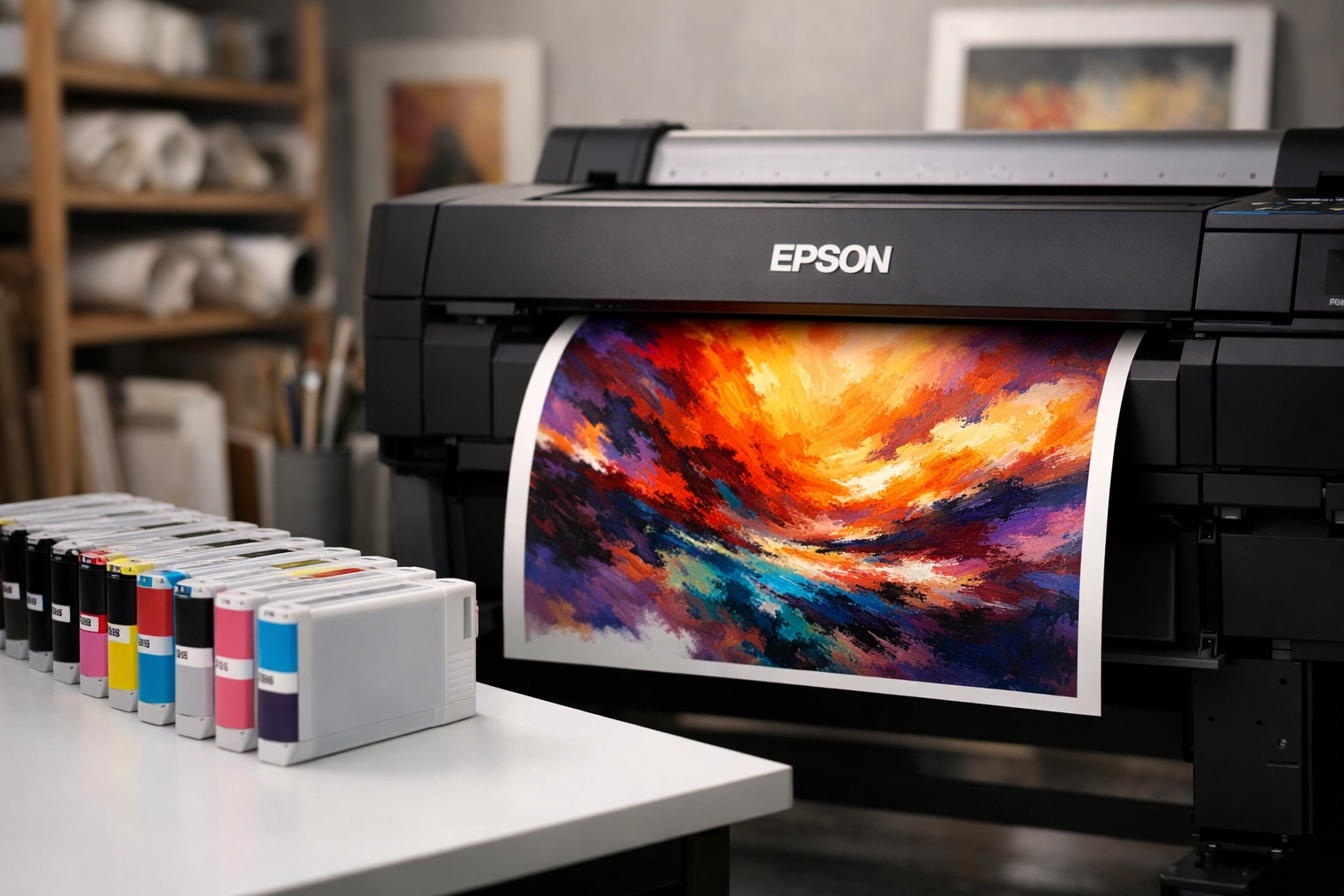
Giclée printing uses high-end inkjet printers made by manufacturers like Epson, Canon, and HP. These aren't your everyday office printers, they're professional machines designed specifically for fine art reproduction.
At Giclée UK, we use calibrated professional printers that can handle everything from A4 prints up to large-scale gallery pieces.
Archival Pigment Inks
This is where the magic happens. Standard inkjet printers use dye-based inks that fade quickly when exposed to light. Giclée printers use pigment-based inks that are:
- Light-fast (resistant to UV damage and fading)
- Water-resistant (won't run if they get damp)
- Archival quality (can last 100+ years under proper conditions)
Most giclée printers use an expanded colour system, typically 8 to 12 different ink cartridges instead of the basic 4-colour CMYK setup. This includes additional shades like light cyan, light magenta, various grays, and sometimes specialty colours.
The result? Smoother gradients, richer blacks, and a wider colour gamut that captures the subtle nuances in your original artwork.
💡 Pro tip: The expanded colour system is particularly brilliant for reproducing watercolours and photographs, where subtle tonal shifts make all the difference.
Museum-Quality Substrates
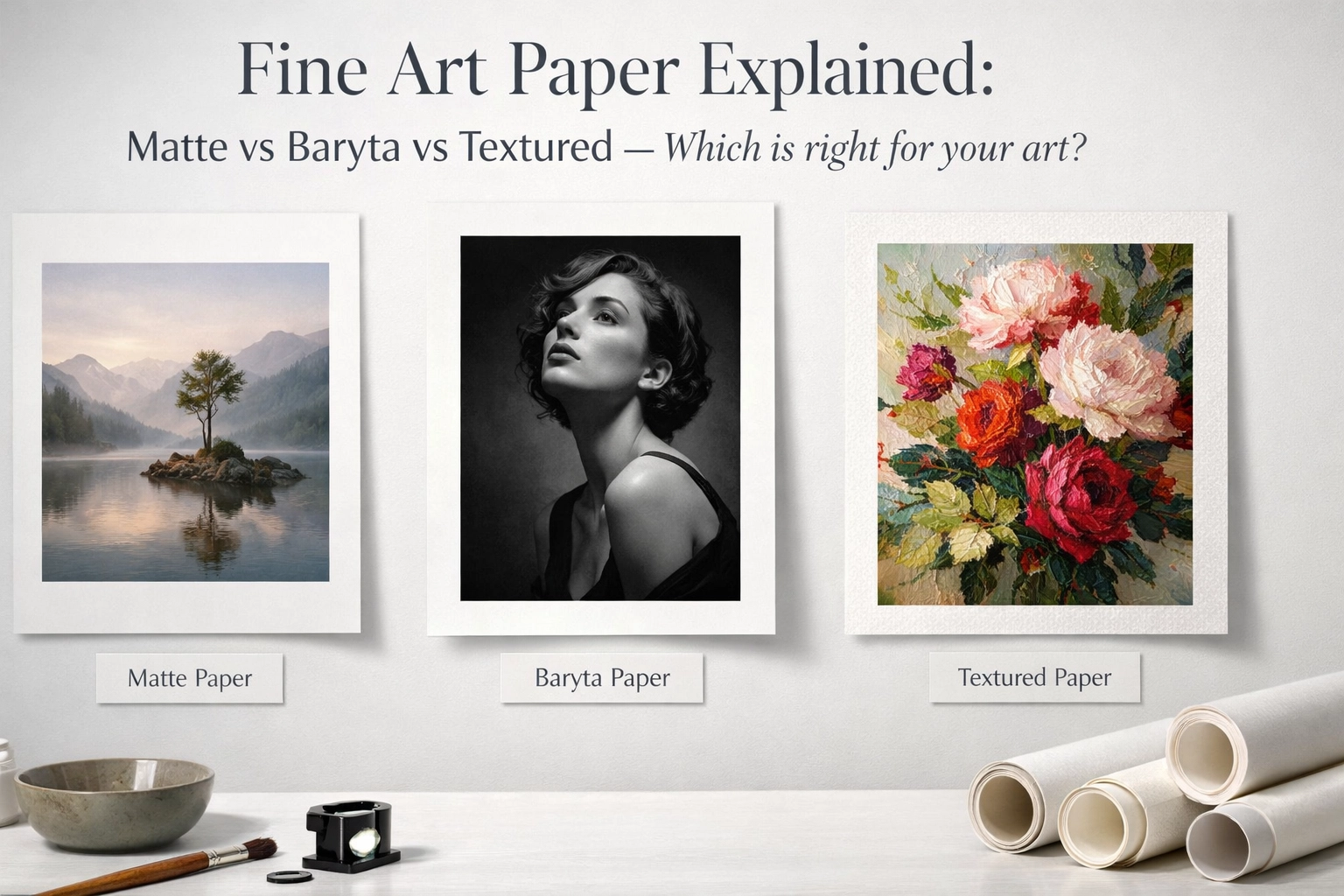
The paper (or canvas) you print on matters just as much as the inks. Giclée printing uses premium archival materials like:
- 100% cotton fine art papers
- Museum-grade canvas
- Heavyweight photo papers (310gsm+)
- Textured watercolour papers
We'll dive deeper into paper choices in another post, but the key point is this: giclée printing pairs archival inks with archival materials to create prints that genuinely last.
⏳ Why Giclée Printing Matters for Artists
Right, so we've covered what giclée printing is. But why should you choose it over other printing methods?
Longevity That Outlasts You
When someone invests in your art, they're not looking for something that'll fade in a few years. Giclée prints can last 75 to 100+ years without significant colour shift or fading, as long as they're kept under reasonable conditions (not in direct sunlight, not in a damp bathroom, you get the idea).
Compare that to standard inkjet prints, which can start looking washed out within 5-10 years. If you're building a reputation as a professional artist, that longevity matters.
Colour Accuracy That Does Your Work Justice
You've spent hours (maybe months) perfecting the colours in your original piece. The last thing you want is a print that looks "close enough."
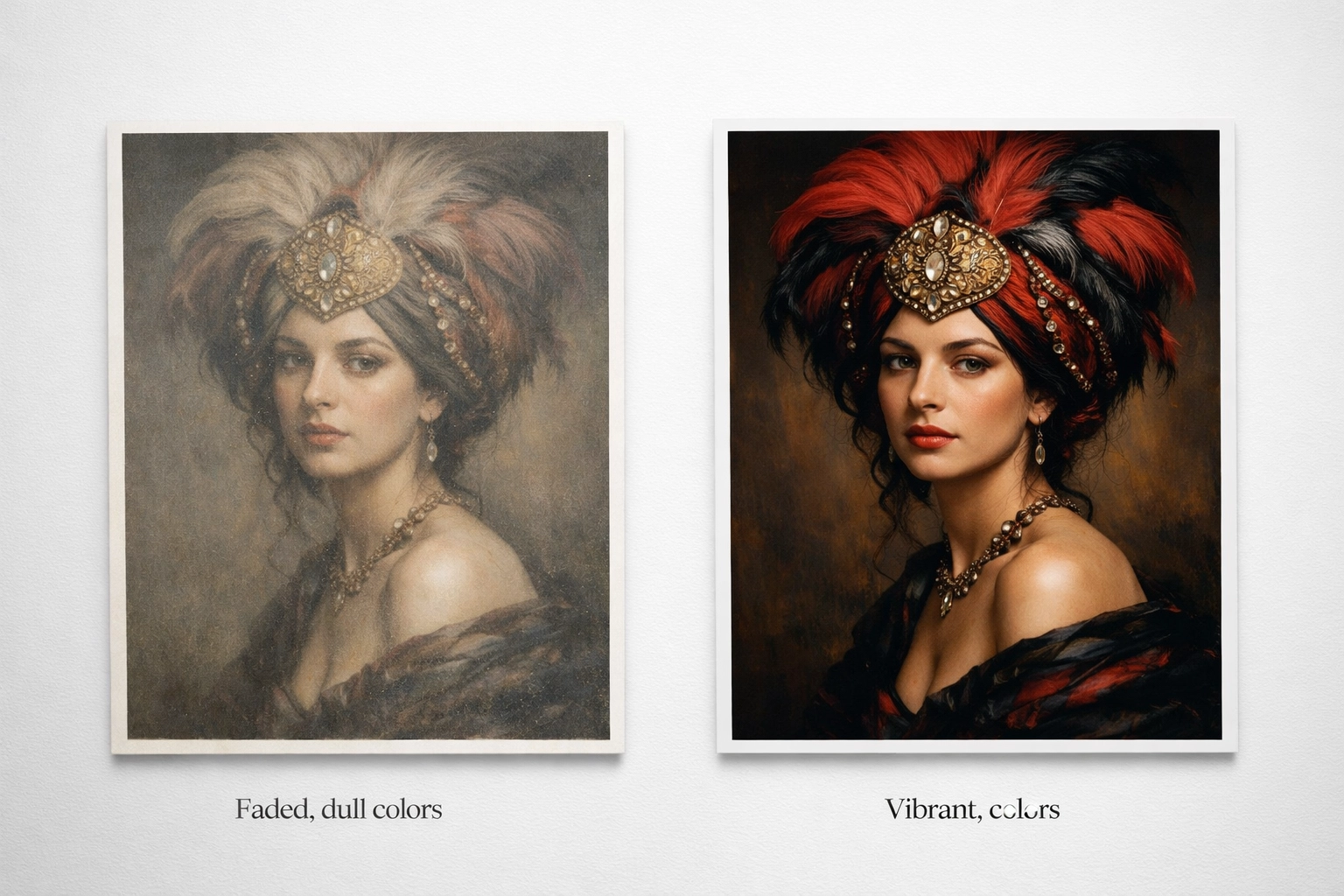
Giclée printing captures colour with exceptional accuracy. The expanded ink set means we can reproduce:
- Deep, rich blacks without muddiness
- Subtle skin tones in portraiture
- Vibrant colours that pop without looking artificial
- Smooth gradients without banding or visible dots
At Giclée UK, we carefully calibrate our printers and use colour-managed workflows to ensure your prints match your original artwork as closely as possible.
Versatility Across Art Styles
Whether you create oil paintings, watercolours, digital art, or photography, giclée printing adapts to your medium. The high resolution and colour fidelity work beautifully across different art styles.
We've printed everything from delicate botanical illustrations to bold abstract paintings, and the process handles them all with the same level of quality.
💡 Pro tip: If you're working from a physical original, starting with a professional scan gives you the best digital file to work from. We offer high-resolution artwork scanning that captures every detail.
📐 How Giclée Printing Actually Works
Here's the step-by-step process:
1. High-Resolution File Creation
Everything starts with a digital file. This might be:
- A high-res scan of your original painting or drawing
- A digital photograph (RAW files work brilliantly)
- A digital artwork created in Photoshop, Procreate, or similar
The file needs to be high resolution, typically 300 DPI at the final print size. If you're not sure whether your file is print-ready, check out our guide on preparing your files for giclée printing.
2. Colour Calibration & Proofing
We use colour-managed workflows to ensure what you see on screen translates accurately to print. This involves calibrated monitors, ICC colour profiles, and sometimes test prints to dial in the perfect result.
3. Substrate Selection
You'll choose your printing material based on your artwork style and intended display. Canvas gives you that gallery-wrapped look, while fine art papers offer a more traditional feel.
4. The Printing Process
The printer sprays microscopic droplets of pigment ink onto your chosen substrate with incredible precision. The combination of high resolution and multiple ink colours creates prints that are virtually indistinguishable from the original at normal viewing distances.
5. Finishing & Quality Control
After printing, we inspect every print for colour accuracy and quality. Depending on your needs, prints can be stretched on frames (for canvas), mounted, or delivered as-is.
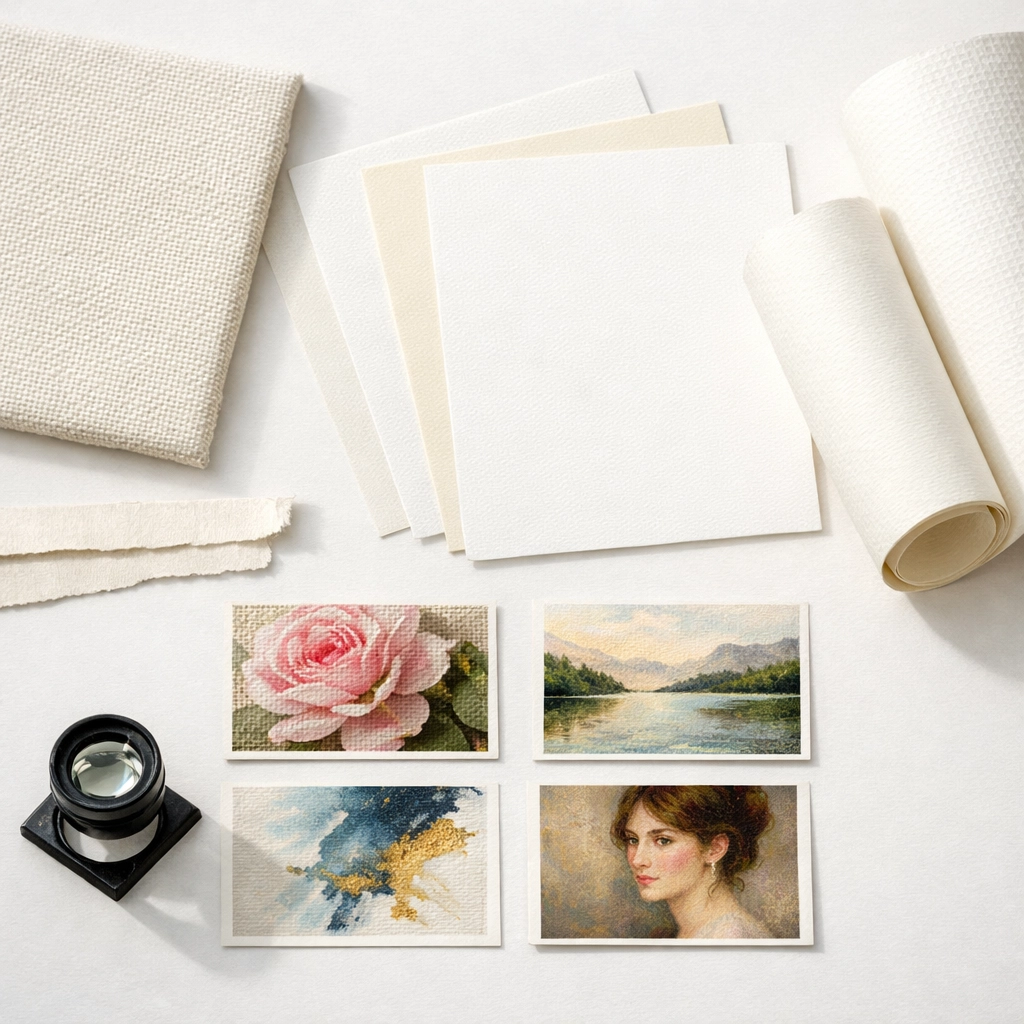
🖼️ Giclée on Canvas vs. Paper: What's the Difference?
One question we get constantly: should I print on canvas or paper?
Giclée on Canvas
Canvas prints have that painterly, gallery-ready feel. The texture of the canvas adds depth, and prints can be gallery-wrapped around wooden frames for a frameless display option. Canvas works brilliantly for:
- Oil and acrylic painting reproductions
- Bold, graphic artwork
- Large-scale pieces destined for gallery walls
Giclée on Fine Art Paper
Paper offers a more traditional, sophisticated look. There's a huge range of textures and weights available, from smooth photo papers to heavily textured watercolour papers. Paper is ideal for:
- Watercolour and gouache reproductions
- Photography and fine art prints
- Limited edition prints that'll be framed behind glass
- Detailed illustrations where sharpness matters
Neither option is "better", it's about what suits your artwork and your collector's preferences. We're always happy to chat through your options if you're unsure.
🎯 Is Giclée Printing Worth It?
Let's be honest: giclée printing costs more than standard printing methods. So is it worth the investment?
If you're selling your work professionally, building a collector base, or creating limited editions, absolutely yes. Here's why:
For Artists:
- You can reproduce sold originals and continue earning from your work
- Create limited edition prints with archival quality
- Offer collectors investment-grade pieces that hold their value
- Build inventory without creating new originals
For Collectors:
- Museum-quality reproductions that last generations
- Colour accuracy that honours the artist's vision
- Investment pieces that maintain their quality over time
Giclée printing sits in that sweet spot between mass-produced posters and original artwork. It lets artists scale their business while maintaining quality standards.
✅ Getting Started with Giclée Printing
Ready to try giclée printing for your artwork? Here's what you need:
- A high-quality digital file (300 DPI minimum at final print size)
- Colour-accurate source material (calibrated scans or RAW photos)
- A clear idea of your final print size
- A decision on substrate (canvas, paper, or need help deciding?)
At Giclée UK, we handle everything from scanning your original artwork to producing museum-quality prints. We work with artists at every stage: from those printing their first reproduction to established artists creating large limited edition runs.
Not sure where to start? Get in touch and we'll walk you through the process. We can advise on everything from file preparation to paper selection to edition numbering.
💼 Why Professional Giclée Printing Matters
You might be tempted to DIY your prints with a home inkjet printer. And look: for test prints or personal projects, that's fine. But there's a massive difference between consumer-grade printing and professional giclée printing.
Professional services offer:
- Properly calibrated equipment for colour accuracy
- Genuine archival inks and materials
- Experience with different art styles and substrates
- Quality control and consistency across print runs
- Technical expertise to handle complex colour profiles
Your artwork deserves to be reproduced properly. It's not just about the technology: it's about the expertise and care that goes into every print.
Giclée printing isn't just a printing method: it's how serious artists reproduce and sell their work professionally. The combination of archival materials, colour accuracy, and longevity makes it the gold standard for fine art reproduction.
Whether you're looking to create your first limited edition run or you need museum-quality prints for an upcoming exhibition, giclée printing gives your artwork the treatment it deserves.
Ready to see what giclée printing can do for your artwork? Contact us for a quote or to discuss your project. We're here to help you create prints you'll be proud to sign.